
Designing the first Build IRL experience for both sides of a club community
UX/Product Design Intern · January – May 2025
Overview
One platform had to work for two very different kinds of people.
Build IRL was a 0→1 platform for starting, running, and joining in-person clubs.
At first, that sounded like one product problem. Research revealed two: builders were overwhelmed by the work happening behind their communities, while potential joiners struggled to tell whether a club would actually feel right for them.
Over 10 weeks, my team and I helped define the MVP around both sides of that experience. We moved from interviews and product framing into core user flows, mid-fidelity exploration, and high-fidelity web and mobile prototypes.
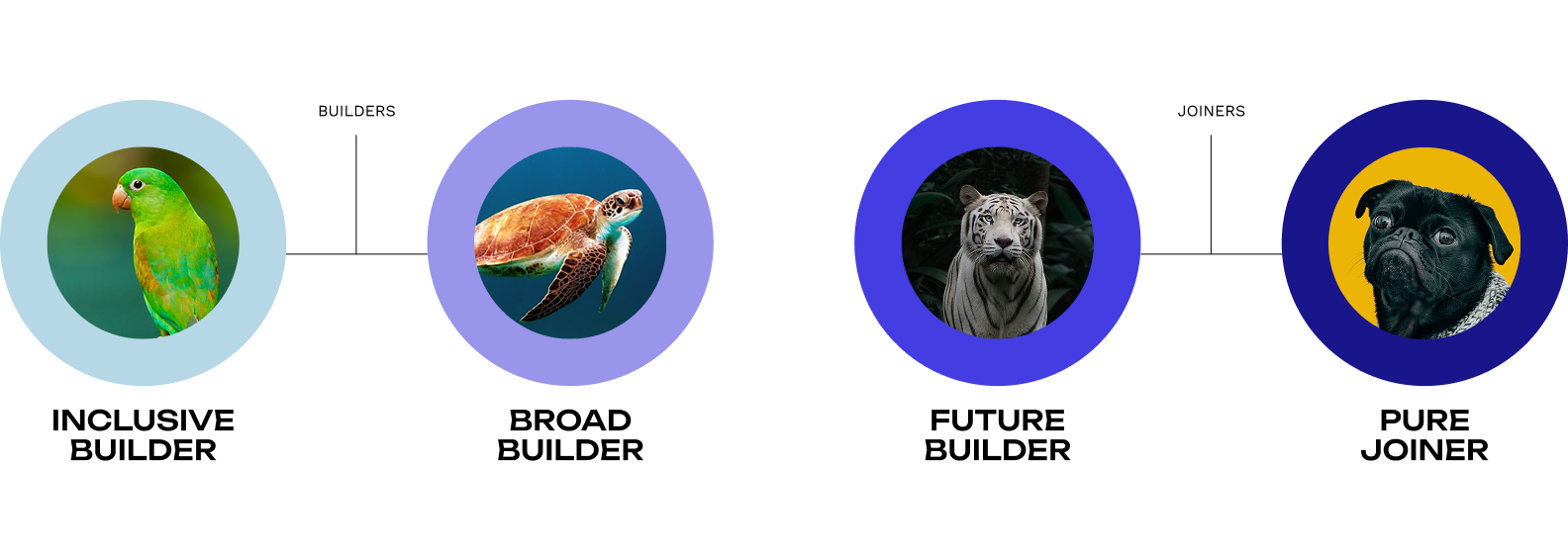
Builder: Less time managing
Joiner: More confidence joining
💡 One community. Two very different needs.
Problem
Running a club was fragmented. Joining one was a leap of faith.
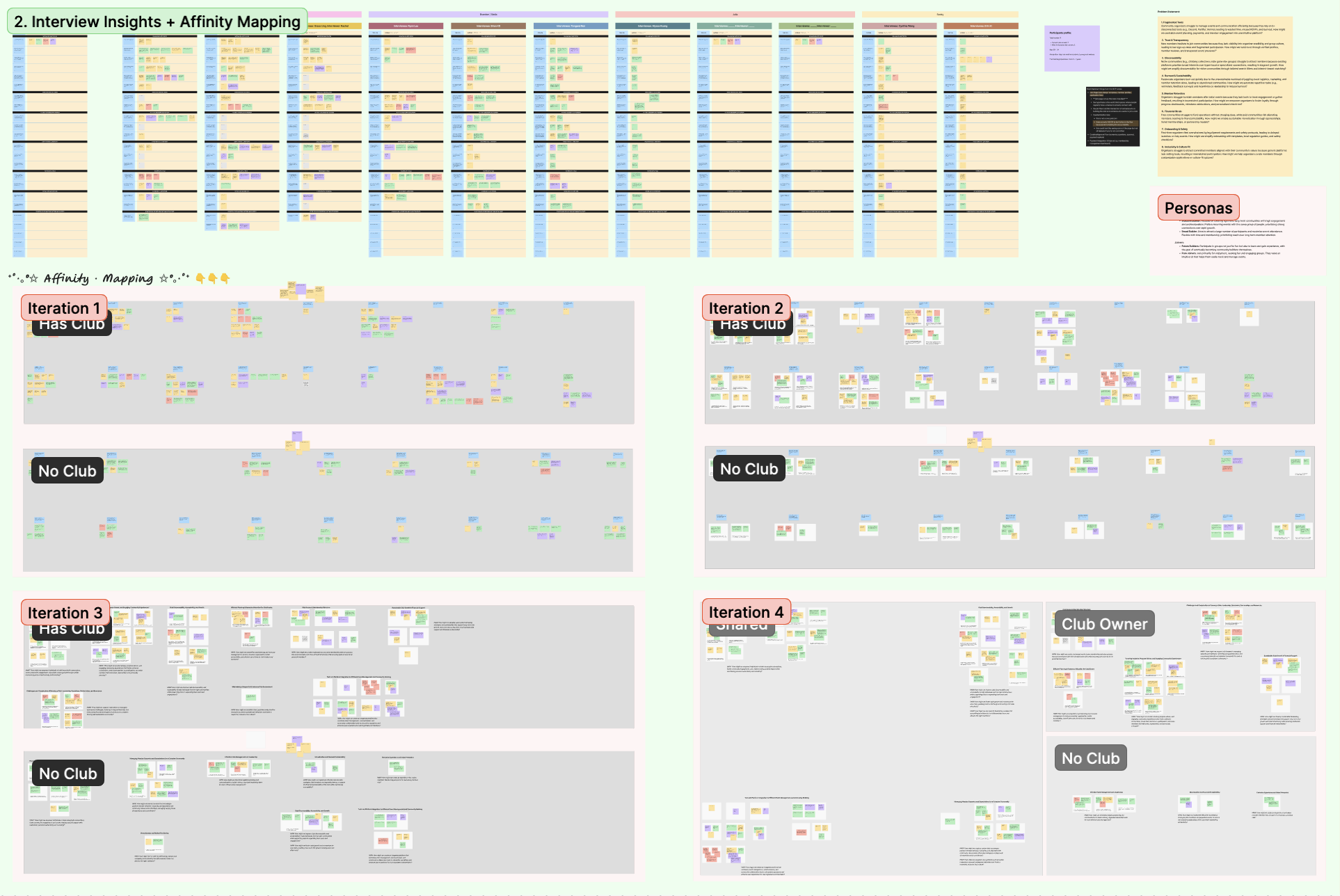
Through more than 10 interviews with club builders and joiners, two problems kept surfacing on opposite sides of the experience.
Builders
Too many moving piecesJoiners
Not enough to go onClub name
Builders were doing too much across too many tools.
Planning, RSVPs, promotion, communication, and logistics were often spread across several platforms. Running the club started to feel like managing software instead of building community.
Joiners didn't have enough context to commit.
A club name, description, and event details could explain what was happening, but not what the community actually felt like. Potential joiners still had to guess whether they'd fit in.
💡 Builders needed less work. Joiners needed more confidence.
The challenge wasn't adding features. It was deciding what the MVP actually needed to solve.
Build IRL could have gone in a lot of directions: events, messaging, discovery, club management, profiles, onboarding, creation tools.
But trying to solve everything at once would just recreate the same complexity we were trying to reduce. So we narrowed the product around two questions:
01 Does this remove meaningful work for builders?
02 Does this give joiners enough context to feel confident joining?
Constraints
The product was still moving while we were designing it
⏳ 10-week timeline
We had a limited window to research, define the core experience, and move key flows into high fidelity.
📝 0→1 product, shifting scope
There wasn't an established product to optimize. Features, flows, and priorities were still being worked out as we designed.
💻 📱 Web + mobile
We explored the experience across both platforms, then had to rethink parts of the work as the product moved toward a more mobile-first direction.
Exploration
Before designing screens, we had to understand how the two sides connected
A club created by a builder eventually became the experience evaluated by a joiner. That meant decisions on one side of the product affected what was possible on the other.
We mapped the core journeys in mid-fidelity first, using them to work through hierarchy, dependencies, and scope before committing to polished UI.
This stage was intentionally loose. As we reviewed the product with stakeholders, screens moved, flows changed, and some ideas were reworked once we could see the experience end to end.
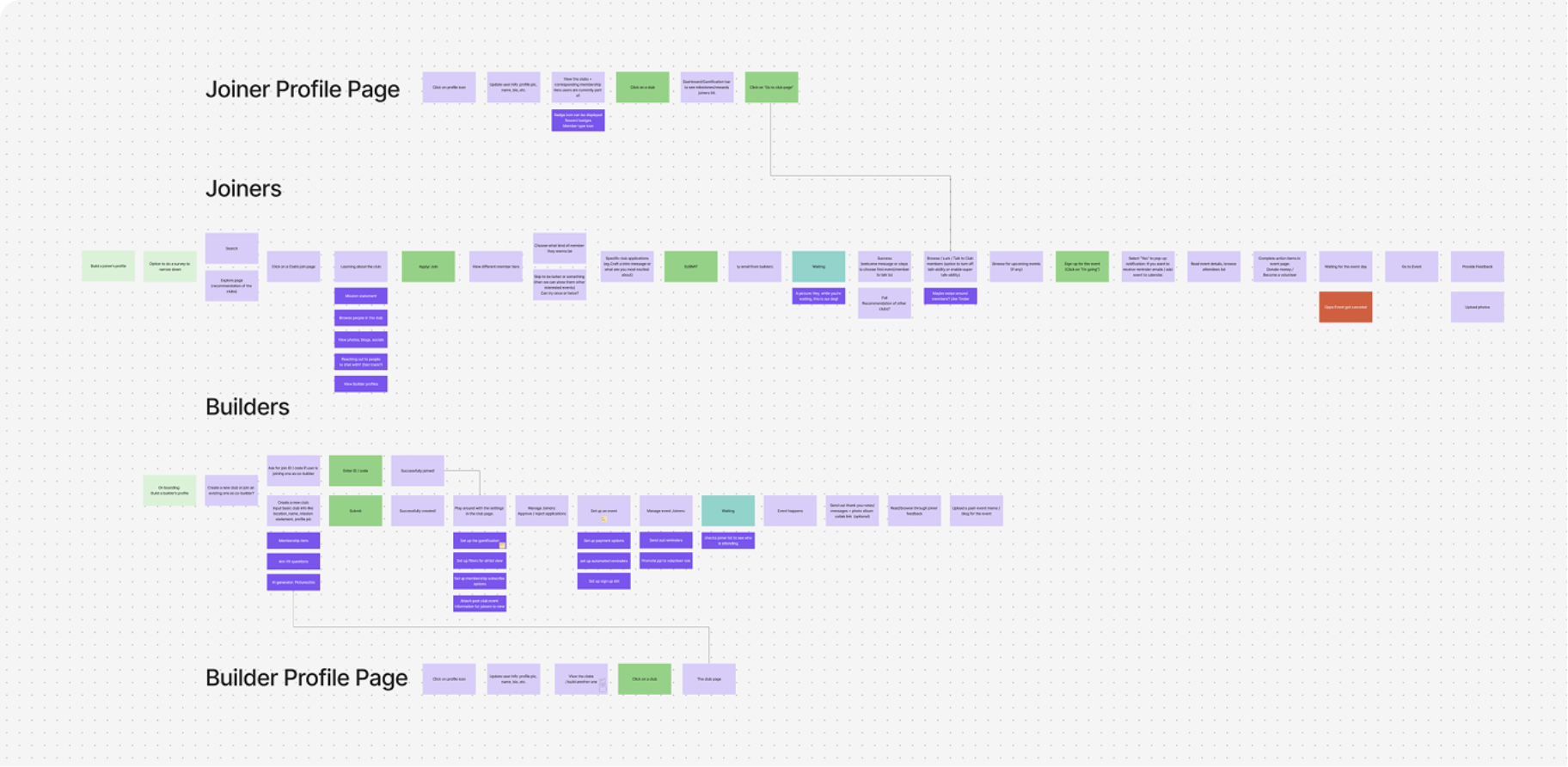
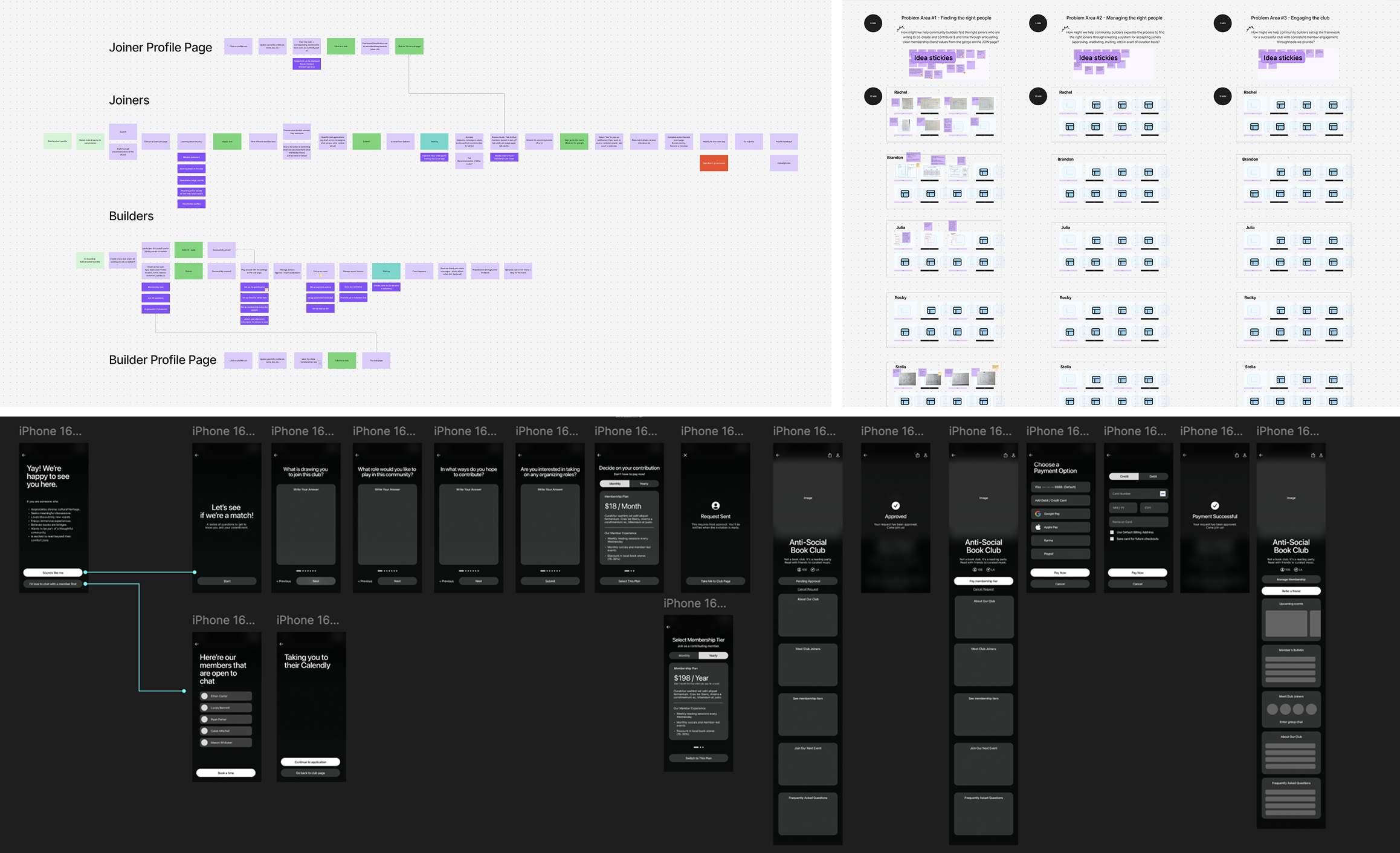
💡 Mid-fi gave us room to make those changes quickly without getting too attached to polished UI too early.
Solution
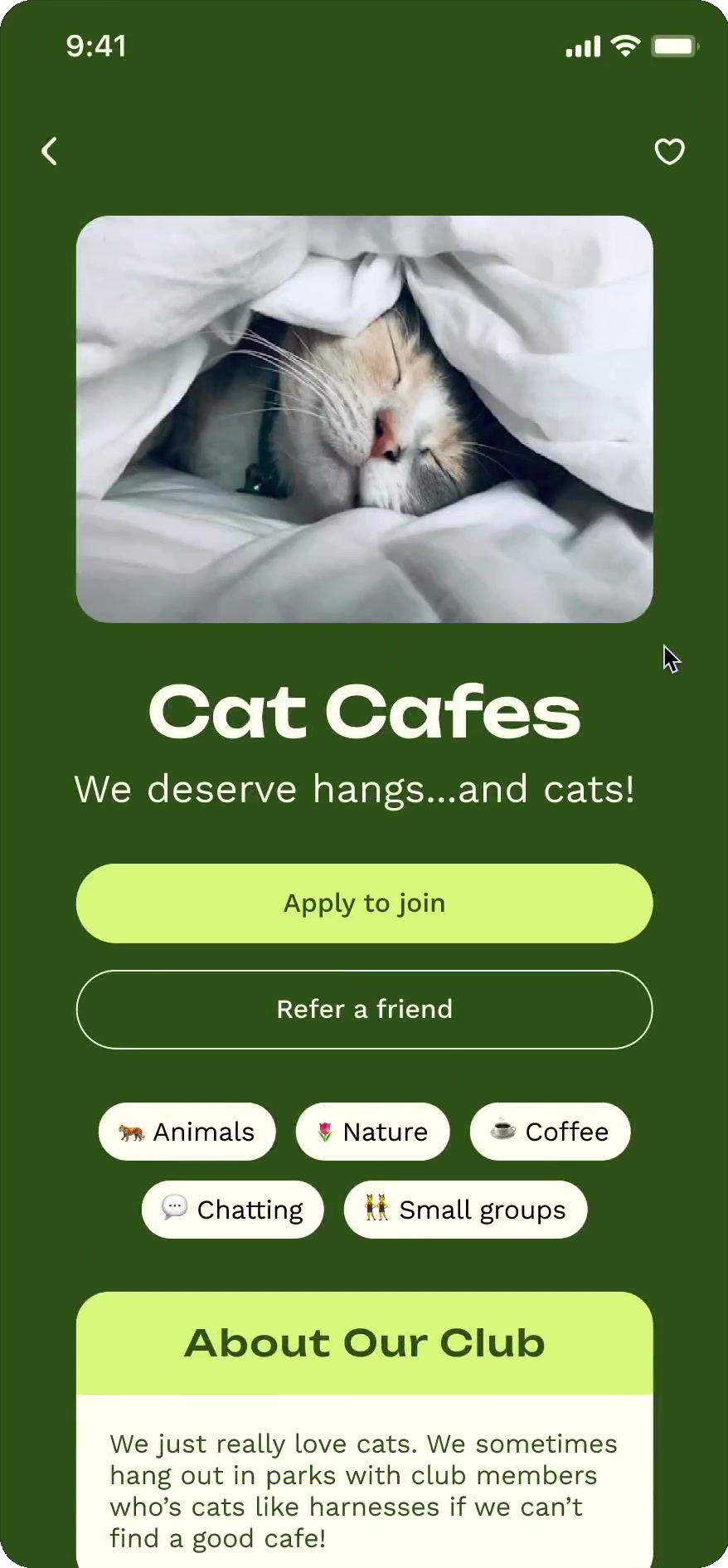
Help joiners understand the club before asking them to join.
The joiner experience couldn't just answer what, where, and when. Research showed people were also trying to figure out whether the community actually felt like a fit.
So, we brought more of the club's personality and context forward — things like interests, visuals, and community details — before committing.
Before
Club name
A basic listing
Build IRL
A community-rich profile
💡 The goal wasn't to add more information. It was to surface the information that actually helped someone decide: Can I see myself here?
01 Discover
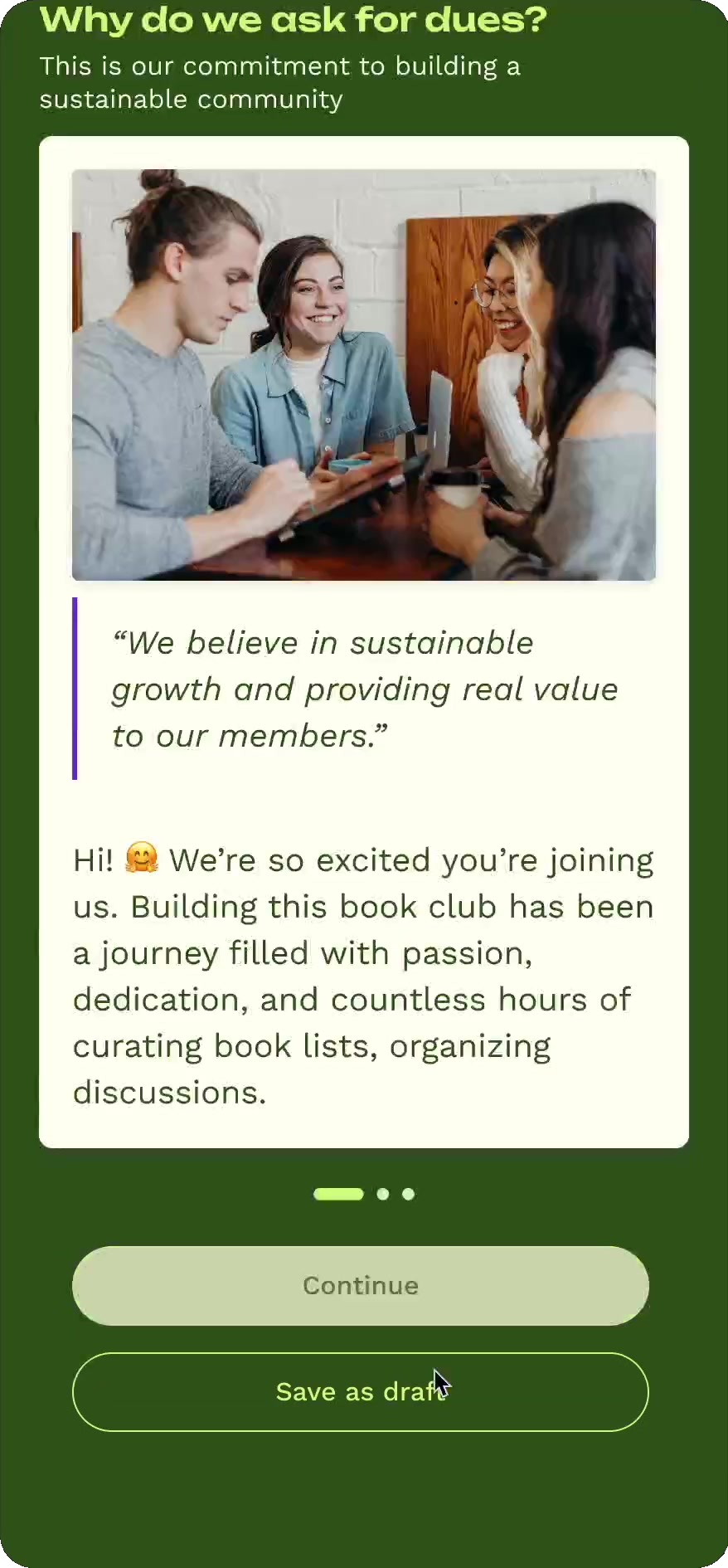
02 Understand
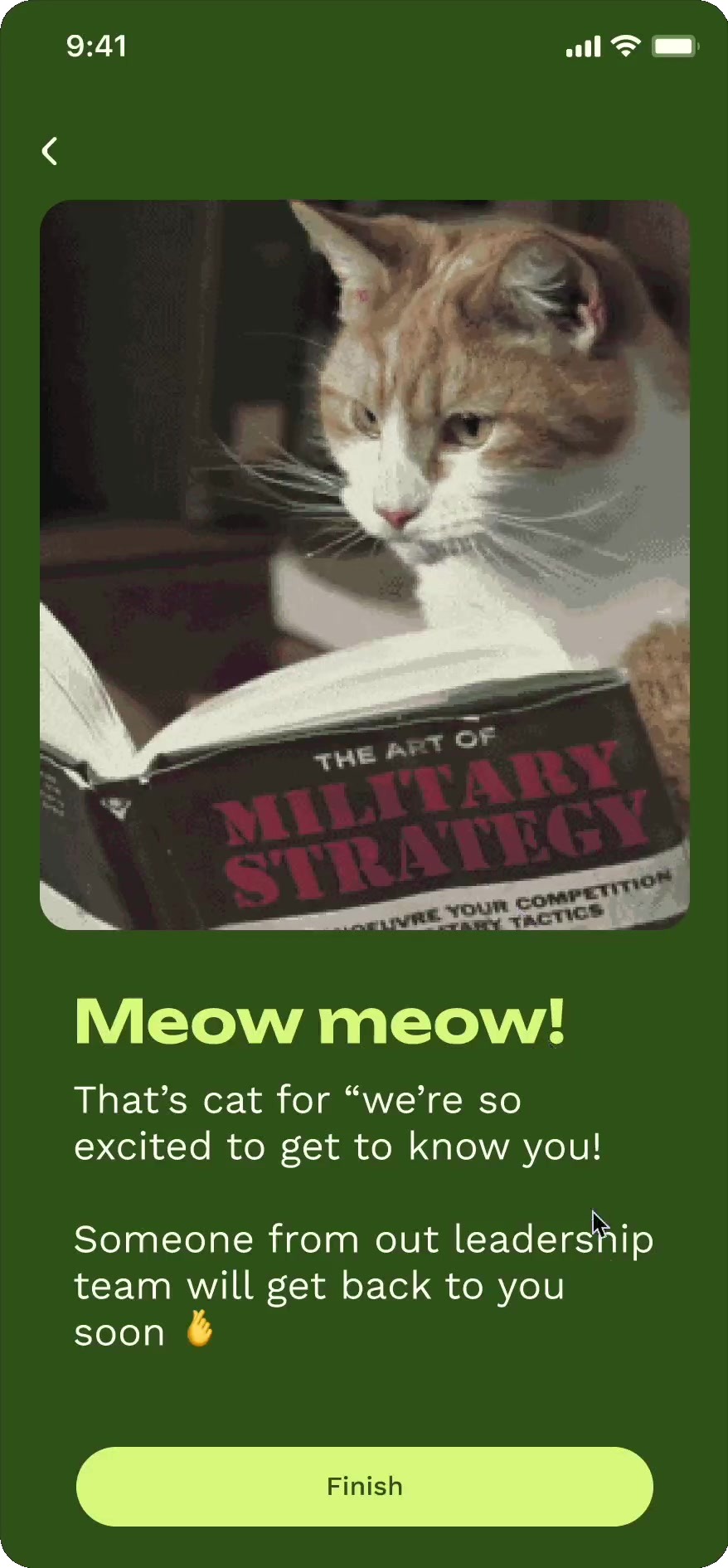
03 Join
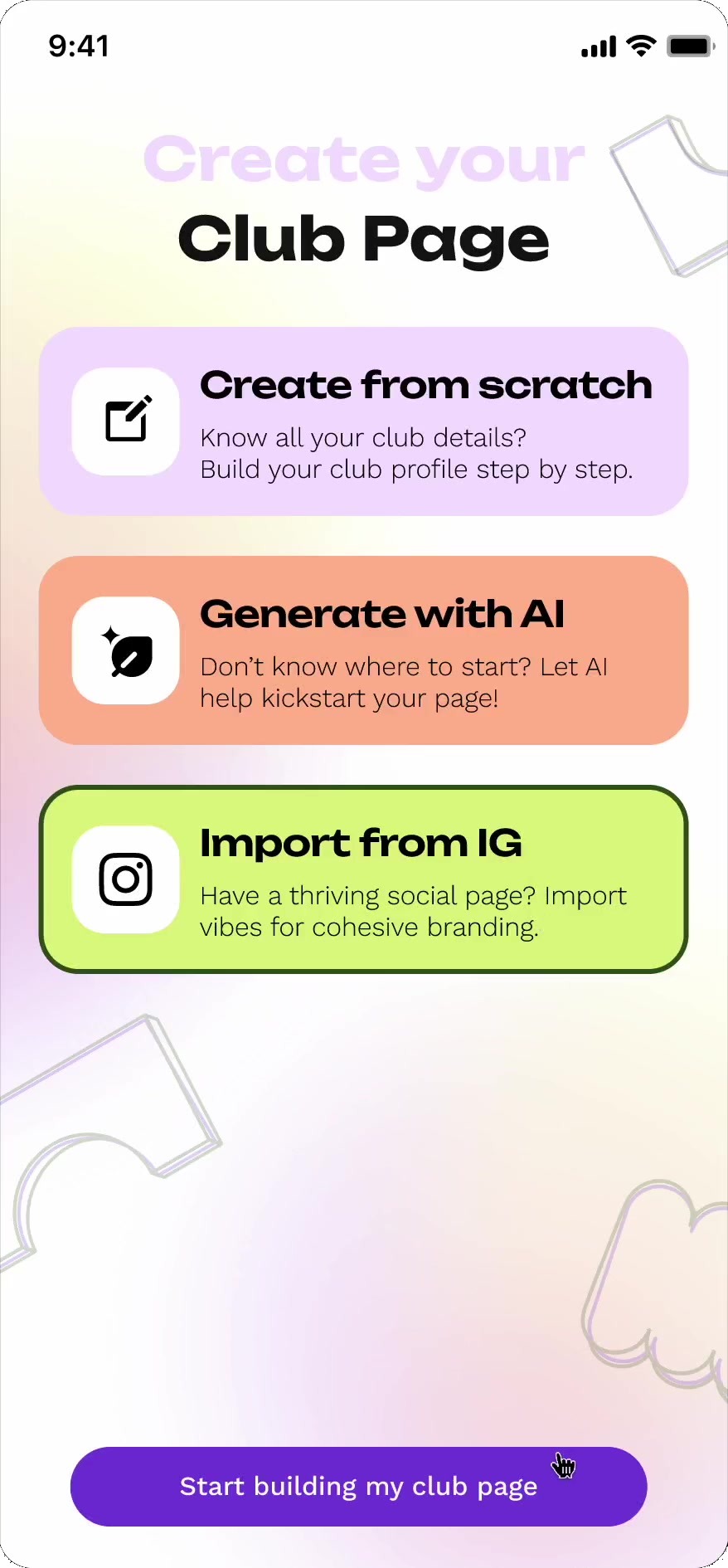
Don't make every builder start from the same place.
Builders came into Build IRL with very different levels of momentum. Some already knew exactly what they wanted to create. Others had an idea but needed help shaping it. And existing communities might already have a visual identity somewhere else.
Instead of forcing everyone through one setup path, we designed three ways builders could begin:
✏️ Create from scratch
Control without unnecessary guidance, for builders who already had a clear vision.
✨ Generate with AI
A starting point instead of a blank page — for builders with an idea but not the words for it.
📸 Import from Instagram
Carries existing branding forward, for communities that shouldn't have to rebuild their identity.
💡 We adapted onboarding to different starting points instead of treating every builder like a blank slate.
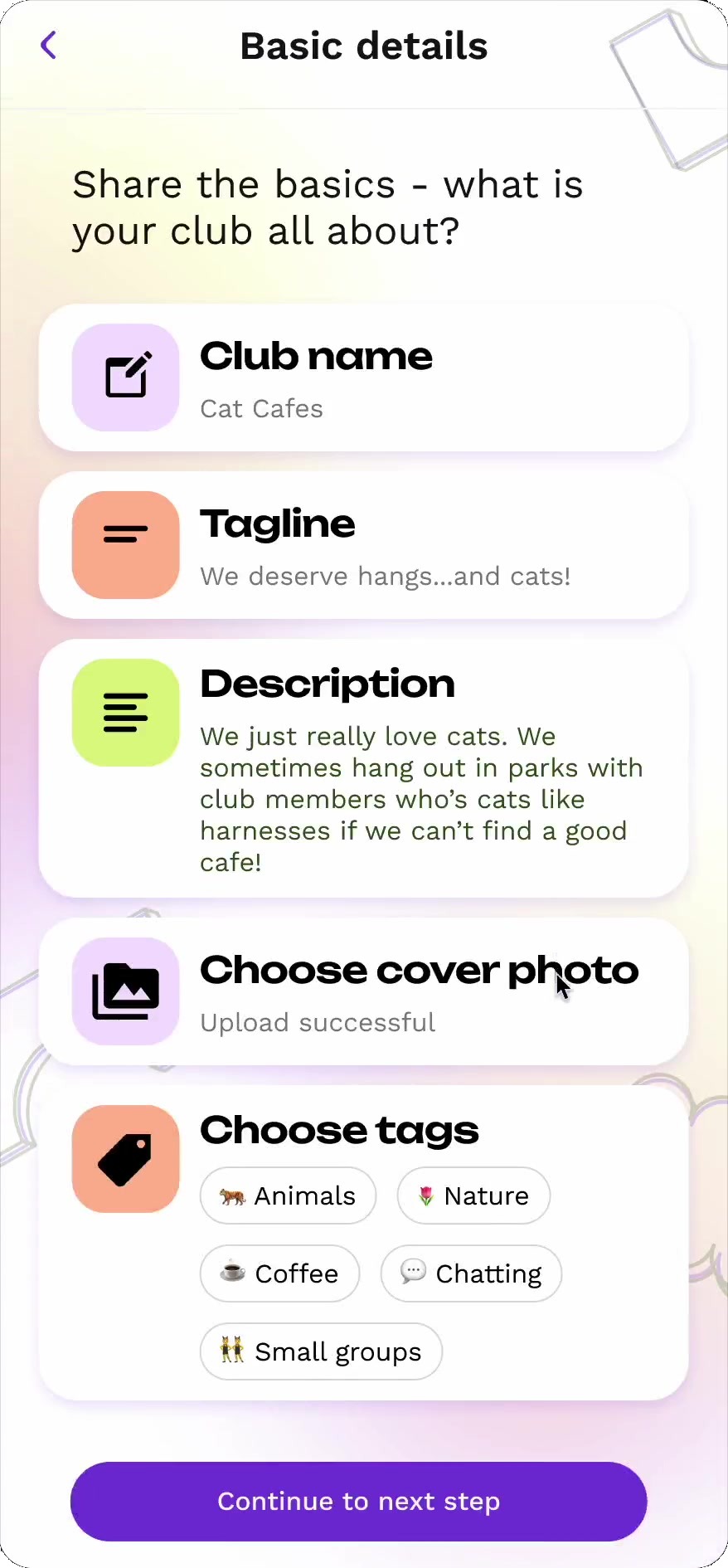
What builders created became what joiners used to decide.
The builder and joiner experiences weren't separate design problems. The information a builder added during creation became the context a joiner relied on later.
A club's visuals, interests, description, and activities had to be easy for builders to provide and meaningful for joiners to evaluate.
 →
→Outcome
From an early concept to a conference-ready prototype.
Over 10 weeks, we defined and prototyped the core Build IRL experience across both sides of the community. The final direction was approved by the team and presented at a conference, where it received positive feedback.
Since I didn't have access to long-term product metrics, the next things I'd want to understand are below — this is a measurement plan, not measured results.
Builder experience
Creation completion rate: Do builders finish creating a club once they start?
Time to publish: How quickly can a builder get a club live?
Builder drop-off: Where do builders lose momentum?
Joiner experience
Club profile engagement: Do people explore the details that support a decision?
Join conversion: Does richer club context help people feel confident joining?
Joiner drop-off: Where do joiners lose momentum?
Reflection
I became more comfortable designing before everything was figured out.
Build IRL changed frequently while we were working on it. Flows I thought were settled would shift after a stakeholder conversation or once we saw the entire experience together.
Earlier in the project, those changes could feel like moving backward. Over time, I started to see them differently. In a 0→1 product, changing a design because the reasoning evolved isn't lost work — it's part of defining the product.
I left the project more comfortable changing direction when the evidence changed, even when that meant letting go of something I had already designed.